
09
January
2026
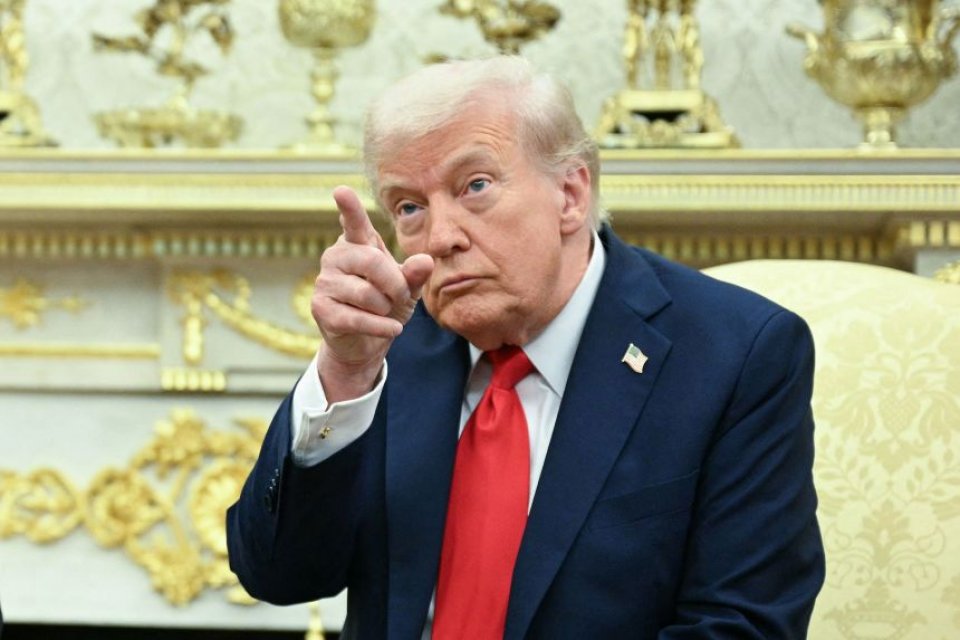
The inconsistent behavior of U.S. President Trump has begun to draw criticism within American public opinion as well. However, no factor has yet emerged that could restrain Trump’s erratic policies. The U.S. National Security Strategy Document published in November was interpreted as a modernized Monroe Doctrine. It appears that a new U.S.-centered capital bloc is being constructed through an Anglo-Saxon cooperation independent of Europe.
The new administration is targeting dominance over the circulation of the dollar in global markets. In this context, there appears to be a game plan that would also slow down the pace of classical globalization. It is likely that this is seen as one possible method for sustaining competition with China.
In a previous article, I stated that Trump is engaged in a struggle with one wing of America’s entrenched establishment. I noted that a political and military structure prioritizing the interests of certain oil and arms companies favors the continuation of the existing order. Although these groups display a right-wing and nationalist character, there is an emerging picture suggesting that their global-scale relationships are expected to be rebalanced or brought under control. Even when their paths occasionally converge, Trump’s new objectives appear difficult to reconcile with these group or groups, which possess wide maneuvering space on a global scale and the capacity to influence American policy. However, I do not believe that these globalist hawks will remain idle. They are a segment that knows the state’s sensitive points and has penetrated its capillaries.
What are these sensitive points?
There exists a state system accustomed to bringing the opposing side into line through bribery and blackmail. We saw the most recent example in Venezuela. The operation against Maduro, which was claimed to be something no army in the world could accomplish, appears to have been carried out through an intelligence-based action relying on an influence-oriented operational logic. They did the same in Iraq. Recruiting insiders has long been a classic method they favor.
This situation cannot be considered, as some commentators claim, an indicator of the United States’ hyper or superpower status. Certainly, its military is strong and it possesses nuclear deterrence. However, it is also known that the American military has had a number of visible problems for a long time. In 2017, a series of accidents involving American warships in the Pacific raised serious question marks. The new developments encountered over the past two years have taken a form that has become the subject of deeply pessimistic analyses and articles. The loss of strength continues.
In an article published in 2024 by a think tank called The Heritage Foundation, vulnerabilities within the U.S. military were laid out. According to this analysis, it was determined that the Navy’s warships operate with an average personnel shortfall of approximately 15 percent, that the targeted number of 400 warships has not been reached, that vessels have begun to wear out, that there are difficulties in personnel recruitment and training, that the maximum age limit for new recruits has been raised, and that personnel from the lowest aptitude test category have begun to be accepted.
It was also stated that the Army has shrunk by approximately 22 percent in terms of personnel, that most major weapons systems entered inventory in the 1980s, and that due to personnel shortages all captains were automatically promoted to the rank of major.
In the Air Force, it was noted that pilots now fly fewer than an average of 130 hours per year, that all officers in flight school graduate, that the rate of those eliminated due to insufficient qualifications has fallen below even 2.5 per thousand, that some fighter aircraft have an average age of 30 years, and that some tanker aircraft have an average age of 60 years.
On the other hand, it is emphasized that the modernization and production of nuclear weapons have not been carried out for a long time.
Another analysis was conducted in March 2025 by the Australian Strategic Policy Institute (ASPI). The published article stated that due to their age, the elements of the U.S. Military Sealift Command (MSC) in the Pacific require renewal and that the fleet, in its current state, is inadequate. It was emphasized that some vessels were observed to be unable to complete long-distance voyages during exercises. The article states that unless urgent investment is made, maritime logistics support in the Pacific would be unable to sustain a prolonged conflict. It is also noted that the fleet has recently faced major difficulties in personnel recruitment.
Another important issue concerns the problems experienced in the American shipbuilding sector. After all, aging warships will need to be replaced with newly built vessels. Moreover, the issue does not concern only the military dimension. It is also stated that problems undermining global competitiveness are being experienced in the construction of civilian commercial ships.
On this issue, a civil society organization called the Coalition for a Prosperous America (CPA) published a new economic report in October 2025 revealing how America’s shipbuilding capacity has dramatically declined following China’s takeover of global shipbuilding. The CPA is a lobbying organization representing manufacturing companies that call on the U.S. government to make greater efforts to protect them from foreign competition.
However, the figures and demands in this report also reveal findings showing that alarm bells are ringing within the American shipbuilding industry itself. The report addresses what is at risk in the American maritime sector under many headings, from the impact of steel tariffs on U.S. shipyards to the threat posed by China’s state-supported shipbuilding dominance.
While China’s share of the global shipbuilding market was approximately 5 percent in 2000, it has now risen to over 50 percent. This expansion is defined as a serious national security problem for the United States, extending from the construction of warships and commercial vessels to global port infrastructure.
Geopolitical risks, environmental changes, regional maritime transportation routes, the Arctic region, the supply of critical minerals—all require a robust fleet. However, while China’s share of global shipbuilding stands at approximately 53 percent, America’s share is only around 0.1 percent.
Despite all these issues having neither been resolved nor put on a stable path, Trump announced—with supposed fanfare—the news that the first vessel classified as “Trump Class,” exceeding 30,000 tons and allegedly forming part of a “Golden Fleet,” would be completed in the early 2030s.
Many questions are now being asked in the West. One of the most important is this: does the decline in U.S. military power reveal a deeper leadership crisis?
There is certainly a psychological dimension to this. However, I previously stated that Trump’s domestic rivals would attempt to isolate him from reality, pushing him into decision-making processes that result in contradictory decisions with irreparable consequences—decisions that neither the world nor American public opinion could accept.
If Trump succeeds, he also has carrots to offer these groups, for example in Venezuela.
Could the Venezuela decision be part of such pressure? When that proved insufficient, did the lottery turn to Colombia, Greenland, or Canada? They have embarked on a game whose end they will not be able to bring under control.
We are going through difficult times. My greatest wish is that these frivolous cowboy-style attitudes come to an end before spilling over into our region. Fundamentally, however, I believe that the global repercussions of the political struggle within the United States could lead to far greater dangers.
Sources:
Wood, Dakota, “In 2024, the U.S. Military Is Weak… and That Should Scare You,” The Heritage Foundation, 15 February 2024, https://www.heritage.org/defense/commentary/2024-the-us-military-weakand-should-scare-you
Rolander, Andrew, “The Dangerous Collapse of U.S. Strategic Sealift Capacity”, Australian Strategic Policy Institute (ASPI), 26 March 2025, https://www.aspistrategist.org.au/the-dangerous-collapse-of-us-strategic-sealift-capacity/
U.S. Navy, Military Sealift Command, official documentation, https://www.msc.usff.navy.mil/Portals/43/Posters/MSC_USNavyShips.pdf?ver=2020-08-13-152916-247
Schuler, Mike, “New Report Warns U.S. Shipbuilding Collapse Threatens National Security,” gCaptain, 1 October 2025, https://gcaptain.com/new-report-warns-u-s-shipbuilding-collapse-threatens-national-security/
Torsekar, Mihir, “How to Solve America’s Shipbuilding Crisis,” Coalition for a Prosperous America CPA, Economic Report, 1 October 2025, https://prosperousamerica.org/wp-content/uploads/2025/10/CPA-Economic-Report-How-to-Solve-Americas-Shipbuilding-Crisis.pdf
“Trump Wants 30,000-Ton Laser-Armed Warships Bearing His Name,” Milliyet Newspaper, 24 December 2025 https://www.milliyet.com.tr/teknoloji/trump-kendi-adini-tasiyan-30-bin-tonluk-lazer-silahli-dev-savas-gemileri-istiyor-7508297
Kırıkkanat, Alp, “Trump’s Test’’, Alp Kırıkkanat Deck Log-Book, 02 June 2025, https://www.alpkirikkanat.com/en/article-detail/26/trump-s-test
Comments ( 0 )