
01
July
2025
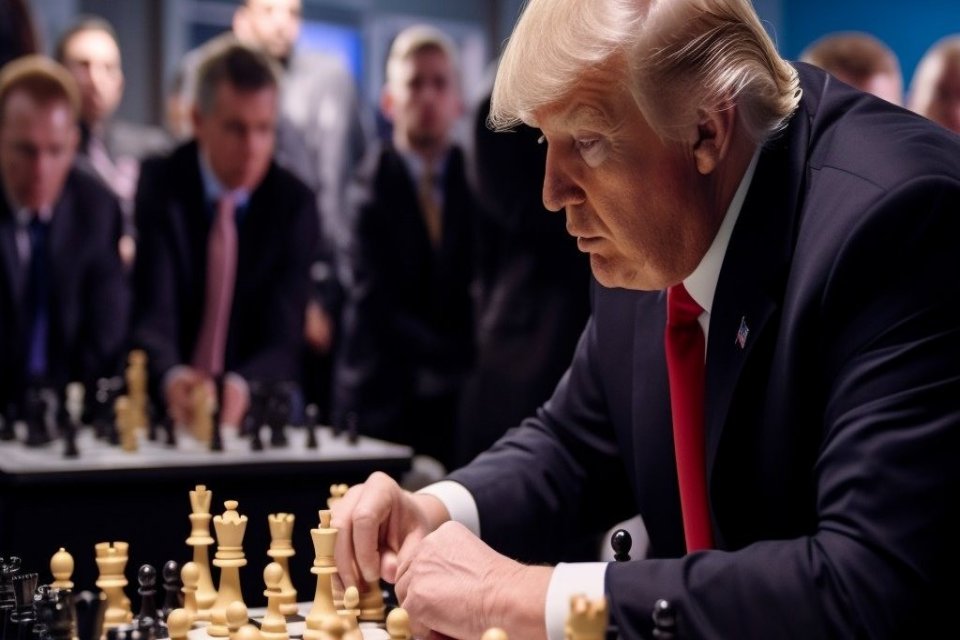
The situation we are facing in our region has become too complex to be explained merely as the result of crossfire between geopolitical actors. The developments at hand are not the kind where one can simply assume the involvement of the United States in every aspect. It has already become evident that there is no single, omnipotent America. A bloc resisting President Trump’s attempts at structural reforms within the U.S. is pushing him toward missteps on the international stage. The economic decisions Trump seeks to implement appear to challenge the established order of global interest groups with which this bloc is affiliated, both domestically and abroad. In this context, intelligence-driven conflicts have started to intensify. In my previous writings, I have stated that this bloc consists of certain defense and oil companies linked to global capital, as well as the senators and high-level government officials who support them.
In this context, to what extent Trump would be able to bring the American state apparatus under control through the appointments he made in his early days remains an open question. The outcomes of the political struggle within the United States may lead to different consequences across critical geographies of the world. The global economy and capital may take on a new form.
The forces opposing Trump are using Ukraine and Israel as instruments.
First, we witnessed Ukraine—likely acting under a higher authority that goes beyond even Zelensky—strike air bases in the most remote corners of Russia. While a strong counter-move from Russia was anticipated, followed by an escalation from Trump, events did not unfold as expected.
The main strategy against Trump is being orchestrated on a broader scale through Iran.
Netanyahu is a more convenient figure to be used. In an effort to repeat certain political mistakes made during the Vietnam War in the context of Iran, bait and traps are being set for Trump and his team. This time, it is not American soldiers who are fighting. However, the pressure exerted through Israel is aimed at driving the Trump administration into miscalculations. In this context, during the 12-day missile exchange between Israel and Iran, the more Iran resisted, the more evident became Trump’s attempts to distort or manipulate the facts for the sake of preserving his image as a powerful leader.
Ultimately, Iran’s regime has not changed, nor does it appear to have abandoned its nuclear program. If these were the political objectives, then they have not been achieved. Once it became clear that the war would be difficult, it was first claimed that Iran would close the Strait of Hormuz. Even if Iran attempted this, it is neither politically nor militarily a feasible or sustainable action. When this narrative failed, efforts shifted toward convincing the world—and the Iranian public—that Iran could not win this war. In line with this, a psychological warfare campaign against Iran was launched. Eventually, B-2 bombers were deployed to destroy the nuclear facilities entirely, yet it became apparent that even this was insufficient on its own.
Those who orchestrated this game should have known that Iran would not surrender easily—and I believe they did. So, in that case, what were their true objectives?
Faced with political objectives that lie beyond Israel’s capacity alone, efforts are underway to force Trump into participating in the war. In doing so, they aim to detach him from reality and push him toward making deeply contradictory decisions that neither the global community nor the American public would find acceptable—decisions that would be difficult to reverse. It is also fairly predictable that, when faced with unimplementable decisions, Trump may resort to an image game reminiscent of the Vietnam era. Indeed, there are already intelligence leaks emerging from within the U.S., indicating that Iran remains unmoved—an early attempt to tarnish Trump’s existing image.
All these developments explain Trump’s contradictory statements, sometimes changing from hour to hour. He is aware of the situation but currently appears to have limited leverage. Therefore, he tries to maintain a stance, even expressing dissatisfaction with Netanyahu and Zelensky—whom he seemingly supports. Yet, just two hours later, he claims he might strike Iran. What he truly needs, although achieving peace at present is difficult, is a medium- to long-term ceasefire between the parties in Ukraine and the Middle East. Only then can he catch a breather. Otherwise, like a boxer who has taken a hook, he will not even be given respite between rounds.
Amidst this turmoil, if Trump can find a reasonable window of opportunity, he may initiate further purges within the military and intelligence communities. Signals of this have already begun to emerge. Leaks within the intelligence apparatus and the wear and disciplinary issues particularly within CENTCOM’s Middle East operations indicate that significant reforms could be implemented in these institutions. However, the opposing faction may launch new efforts to prevent the U.S. government from gaining any respite. Ultimately, depending on the outcome of the internal U.S. power struggles, we will also witness the fates of Zelensky and Netanyahu—and, of course, Trump himself.
Let’s also consider the situation from our perspective. At present, as conflicts among international capital groups become increasingly complex, tracking developments intellectually has grown more difficult. It is clear that actors beyond the familiar entities are involved. Therefore, it is evident that our country needs a healthier flow of information, a freer and more reliable media, and of course, serious think tanks. At times, hypotheses and theories are presented to us as if they were proven facts, which complicates critical reasoning. For these reasons, our scope of insight remains limited.
Why is this important?
They try to create unease by presenting absurd claims like “Turkey is next after Iran.” However, they attempted this during the July 15 betrayal through their domestic agents and failed. Of course, this does not mean they won’t try again. The recent increase in operations against FETÖ (Fetullah Gülen Terrorist Organization) is significant in this context. Nevertheless, comparing Turkey to Iran in this regard is quite absurd. Naturally, once the dust settles in our region, some of the global system’s dominant powers may intensify their demands against us. They might find new traitors or adopt different methods. But let us not forget that even the greatest power has its limits. No power is eternal. Our history is filled with such examples.
Wishing you safety and well-being…
References
Arent, H. (2021). Lying in politics (2nd ed., pp. 79, 81, 82, 84–85). Istanbul: Sel Publishing.
Milliyet Newspaper. (2025, June 21). Trump again denied his own intelligence: “I don’t care what they say!” Retrieved from https://www.milliyet.com.tr/dunya/son-dakika-trump-yeniden-kendi-istihbaratini-yalanladi-ne-soylediklerini-umursamiyorum-7394336 (Accessed June 28, 2025)
BBC Turkish. (2025, June 25). Trump demanded the firing of journalists who reported the leaked Iran report from the Pentagon. Retrieved from https://www.bbc.com/turkce/articles/cdx5n17yw01o (Accessed June 28, 2025)
Cohen, Z. (2017, February 1). Report: Centcom leaders didn’t cook ISIS intelligence. CNN Politics. Retrieved from https://edition.cnn.com/2017/02/01/politics/report-centcom-intelligence (Accessed June 28, 2025)
Comments ( 0 )