
31
May
2026
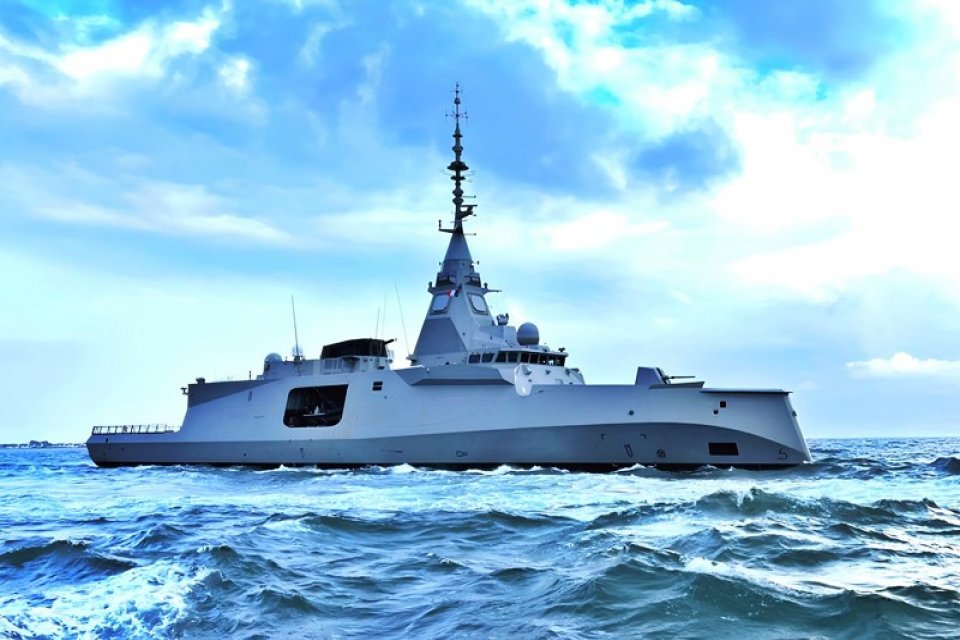
Greece is undertaking a major effort to enhance its maritime military power. Following the advances achieved by Türkiye’s defence industry in recent years, Greece has opted for a predominantly foreign-procured model to accelerate the modernization of its navy. In this context, it aims to provide a significant boost to its fleet and usher in a new era of naval capability through the acquisition of French-built Belharra-class frigates. However, it remains a fact that procuring modern warships alone is not sufficient to build a modern navy.
In the “Achilles Shield” defence project announced last year by Greek Foreign Minister Nikos Dendias, a historical perspective was presented to enhance situational awareness in the public sphere. However, considering past examples in Greece regarding the implementation of new approaches, I noted that such efforts could ultimately produce outcomes detrimental to their own interests.
I remain of the same view. Within the framework of the open-source information I have been monitoring, I will attempt to assess the situation.
Dendias’s Statement: “The Ship Has Not Yet Been Integrated into the Fleet”
It had been stated that one of the key units of the new defence architecture would be the French-built Belharra-class frigates. In my previous analyses, I addressed the challenges related to the sustainability of HS Kimon (F-601), the lead ship of this class, and its sister ships that are expected to join the fleet, particularly in the areas of operations, logistics, material, personnel, and training. More recently, certain issues concerning Kimon have begun to be discussed with greater openness within the Greek public sphere. Ultimately, it was openly acknowledged that the ship is not yet fully operationally ready.
In an interview given by Dendias in April on the television channel Alpha TV, he stated the following regarding the ship and its crew:
‘‘They know their ship well. They were in France for a long time. They know it well. What has not been completed, and I want to be honest with you and with Greek citizens, is that the ship has not yet been fully integrated into the fleet operationally. That is the truth.” In other words, there are some difficulties with the systems communicating with each other when operating with the Fleet. Under normal conditions, this process would take several months. Under emergency conditions, however, we can do it much faster.’’
The above statement to that effect was made public. Dendias also appears to be quite optimistic regarding the resolution of the issue.
From a technical perspective, these statements suggest that the ship may have experienced certain difficulties in performing operational functions such as command-control, data sharing, and communications with other surface, subsurface, and air units within a Naval Task Group.
This situation points to a significant problem in the operational theatre. There are numerous possibilities. For instance, were there difficulties in achieving a common tactical picture, the real-time transmission of target data, the effective use of tactical data links, or the execution of cooperative engagements? Or were there significant delays in these critical functions? In what respects is a task group comprising Kimon and multiple other units unable to achieve the ability to operate at sea as a single, integrated organism?
Ultimately, if such a common software system exists, it is not entirely clear which platforms a common software architecture is intended to support or why it may have proven inadequate. Indeed, it is not even fully evident from open-source information whether such software actually exists. Moreover, open-source reporting can be misleading on matters of this nature. The issue of interoperability between Kimon, designed with a network-centric architecture distinct from that of other vessels,and platforms of different origins has increasingly become a point of interest within the Greek public sphere. Taken together, these developments highlight the challenges that accompany the acquisition of a complex foreign-built platform.
As the Minister stated, the individual training of the ship’s crew, the vessel’s sea trials, and its acceptance in accordance with the contractual delivery requirements were conducted in France. However, once the ship arrived in Greece, its training, inspections, and integration processes should already have been planned in advance. In light of subsequent developments, the impression is that, even if such planning had been undertaken, the process has not progressed in the manner or at the pace originally envisaged.
The issue does not end there.
We observe that the ship, which arrived in January 2026, was deployed on a mission to Southern Cyprus in March 2026 alongside another vessel of different origin, systems, outfitting, and technical configuration, before its operational readiness processes and integration with other platforms had been fully completed.
Southern Cyprus: A Show of Presence or a Tactical Necessity?
Ultimately, the French-built HS Kimon (F-601), commissioned in 2026, and the German-built HS Psara (F-454), commissioned in 1998, deployed to Limassol. It has been reported that, following their arrival, the vessels participated in a Search and Rescue Exercise as well as various training activities. In commentary published thereafter, it was suggested that the older vessel, Psara, was significantly more effective in detecting asymmetric threats. However, the basis for this assessment is not entirely clear. Was this conclusion one of the outcomes of the training conducted off Cyprus before full command-and-control integration between the two ships had been achieved? The only publicly known fact concerning Psara in this regard is that, in 2024, under the EU’s Aspides Operation in the Red Sea, it shot down two Iranian-built drones. In the absence of an official public statement, the matter remains difficult to fully understand.
In conclusion, under the current circumstances, the Greek public appears to have coalesced around two distinct perspectives regarding the deployment of HS Kimon to Southern Cyprus.
One school of thought argues that the two ships were executing a layered defence strategy in Southern Cyprus. According to this view, Kimon, equipped with its advanced Sea Fire radar and Aster 30 missiles, was tasked with countering high-altitude ballistic missile threats, while Psara, operating beneath this coverage, drew upon its operational experience to provide a dedicated defence capability against low-altitude drone swarms.
In an environment where it has been publicly acknowledged that Command-Control integration has not yet reached the desired level, it remains unclear how this layered concept was, or is intended to be, implemented in a coordinated manner by the two ships. Furthermore, what exactly is the threat in Southern Cyprus? Is it the alleged ballistic missiles reportedly directed by Iran toward the British bases on Cyprus, claims that were subsequently denied by the parties concerned? On the other hand, if drone swarms are anticipated, from whom, for what purpose, and from which direction are they expected? To date, the government has not provided explanations sufficiently persuasive to address these questions in the public domain.
Another school of thought argues that, while every new warship may encounter issues that can be rectified over time, it is illogical to deploy Kimon to an area portrayed as carrying potential risks before the vessel has completed its operational readiness processes. According to this view, the ship is being instrumentalized for political purposes.
The Integration Process and Type Organization
Given the nature of the shipbuilding and outfitting processes, I assess that integration with the existing legacy fleet must necessarily have been taken into consideration from the outset. However, open-source information is insufficient to make a concrete assessment of the extent to which, and the timeframe within which, effective integration can be achieved between Kimon and the various other naval assets.
Compared to older-generation vessels, Kimon is a fully digital platform. According to promotional document published by the manufacturer, Thales, the Sea Fire AESA radar is claimed, although this has not yet been fully validated in operational conditions, to perform radar scans within milliseconds, provides early warning of attacks, with over 300 km air coverage, detecting and tracking over 800 objects at up to 90° elevation. These, however, are textbook specifications. In light of these and similar technical characteristics, bringing legacy platforms into a fully coordinated operational framework with such an advanced warship may not be achieved within the short timeframe envisaged by Minister Dendias.
Another possibility is that they may be assessing the construction and delivery process of a modern ship class, scheduled to continue through 2030, from a more holistic perspective. In this context, it may be considered reasonable for them to await the arrival of the remaining three sister ships from France. Following the expected deployment of HS Nearchos (F-602) in the near future, they could establish the foundations of their Type Organization and the associated pillars of operations, training, personnel, and materiel on the basis of a common class of vessels, separate from the legacy fleet and centered on the employment concepts of the sister ships themselves.
Messages Intended to Be Conveyed to the International Community
Beyond the technical debate, the political and symbolic employment of Kimon also merits attention. In the face of certain realities and possibilities brought to light by Dendias’s statements regarding Kimon, there appears to have been a greater emphasis on image-driven political and military messaging centred on the vessel. Alongside the operational discussions, Kimon appears to have assumed a symbolic yet influential role within the discourse of Greek foreign policy.
For example, the opportunity was not missed when the French aircraft carrier Charles de Gaulle, accompanied by other foreign naval vessels, called at Southern Cyprus while Kimon and Psara were present there at the same time. By presenting France’s dominant military presence alongside Greece’s narrative of protecting the Hellenic world within the same strategic framework, they began to incorporate two distinct rationales into a common political narrative under the banner of “Universal Hellenism.”
On the other hand, photographs of Macron and Mitsotakis on Kimon’s bridge alongside the ship’s commanding officer were released to the public. In this context, open-source reporting also brought the commanding officer’s identity and professional background into the headlines. The commanding officer appears to possess an educational background in applied physics, reflecting expertise in advanced technologies. Amid all these inconsistencies, it is evident that merit was given significant weight in the appointment of the vessel’s commanding officer.
In conclusion, for warships equipped with advanced technologies such as the Belharra class, a scientific and methodical planning process should have been undertaken before, during, and after the phases of requirements definition, project planning, shipbuilding, outfitting, training, and acceptance.
Can Greece’s Technical Infrastructure Support This Technological Transformation?
Dependence on external sources in the technological and logistical domains, coupled with defence budgets that have yet to reach the required level, stands out as one of the most significant structural constraints on the anticipated transformation. For this reason, the question of to what extent the capabilities gained through the introduction of modern platforms, and their sustainment, can be maintained during a prolonged crisis or wartime environment remains highly relevant.
During the initial phase extending to 2030, and in any subsequent phases that may follow, it will become clear to what extent Greece will be able to carry out the maintenance, repair, and sustainment of these and similar modern warships using its own national capabilities and resources.
However, it is reported that Greek shipyards, which had remained partially underutilized until late 2024, have increased their contribution to the country’s gross domestic product to 1.5 percent as a result of rising workloads since the beginning of last year, with a target of reaching 2.5 percent within the next five years. New defence projects and potential external support could further increase these figures. Nevertheless, all of these developments remain contingent upon realistic political objectives.
A navy does not consist solely of modern warships; it is a comprehensive instrument of power whose true value derives from the human capital capable of operating those vessels effectively and sustainably, a robust training system, technical and logistical infrastructure, maintenance and repair capacity, and an institutionalized body of doctrinal expertise.
Within the next one to two years, it will become evident whether Greece has merely acquired a number of modern warships, or whether it is genuinely seeking to establish a sustainable modern naval force commensurate with the capabilities of its technical and industrial infrastructure.
References:
Karvounopoulos, P. (2026, April 14). Greece’s major risks in the war. Data Journalists. https://www.datajournalists.co.uk/2026/04/14/greece-s-major-risks-in-the-war/?lang=en. Retrieved May 27, 2026.
Τα μεγάλα ρίσκα της Ελλάδας στον πόλεμο [Greece’s major risks in the war]. (2026, April). YouTube. https://www.youtube.com/watch?v=d75DHGc6TfM&t=2s. Retrieved May 30, 2026.
Cleaver, T. (2026, March 5). Dendias: Cyprus can now feel safe. Cyprus Mail. https://cyprus-mail.com/2026/03/05/dendias-cyprus-can-now-feel-safe. Retrieved May 30, 2026.
Kampouris, N. (2026, March 14). How a Greek frigate solves the West’s cost problem against Iranian drone swarms. Greek Reporter. https://greekreporter.com/2026/03/14/greek-frigate-solve-cost-problem-iranian-drones/. Retrieved May 27, 2026.
Thales Group. (n.d.). Sea Fire: Testimonial from the commander of the Admiral Ronarc’h. https://www.thalesgroup.com/en/solutions-catalogue/defence/naval/sea-fire. Retrieved May 27, 2026.
Yunanistan’ın yeni savaş gemisini bulduk: HS Kimon ne kadar güçlü? [We found Greece’s new warship: How powerful is HS Kimon?]. (2026, February). YouTube. https://www.youtube.com/watch?v=7KArubUSlL8. Retrieved May 27, 2026.
Military Exercises with Kimon, Patriots, and Drones. (2026, March 16). OEMA. https://en.protothema.gr/2026/03/16/military-exercises-with-kimon-patriots-and-drones/. Retrieved May 29, 2026.
Who is Commander Ioannis Kizanis, the Captain of the Frigate HS Kimon. (2025, December 19). OEMA. https://en.protothema.gr/2025/12/19/who-is-commander-ioannis-kizanis-the-captain-of-the-frigate-hs-kimon/. Retrieved May 27, 2026.
Lawrence Livermore National Laboratory. (2009, January 23). Greek officer recognized for work with LLNL. https://www.llnl.gov/article/32961/greek-officer-recognized-work-llnl. Retrieved May 27, 2026.
Fischer, J. (2008, December 10). Fall graduation awards ceremony honors top NPS students, faculty. Naval Postgraduate School. https://nps.edu/-/fall-graduation-awards-ceremony-honors-top-nps-students-faculty. Retrieved May 29, 2026.
Getty Images. (2026, April 25). Greece-France-Defence-Diplomacy [Photograph]. https://www.gettyimages.com/detail/news-photo/frances-president-emmanuel-macron-greets-kimons-commander-news-photo/2272391647. Retrieved May 30, 2026.
Cleaver, T. (2026, March 9). Christodoulides, Mitsotakis visit Greek frigate off Cyprus coast. Cyprus Mail. https://cyprus-mail.com/2026/03/09/christodoulides-mitsotakis-visit-greek-frigate-off-cyprus-coast. Retrieved May 30, 2026.
Yunan tersaneleri atağa geçiyor [Greek shipyards are gaining momentum]. (2025, February 21). Haber Denizde. https://www.haberdenizde.com/denizde-gundem/yunan-tersaneleri-ataga-geciyor/. Retrieved May 27, 2026.
Yunan Bakan Dendias'tan İtiraf! “Sizden Saklamayacağım, Bütçemiz Yeterli Değil” [Greek Minister Dendias Admits: “I Will Not Hide It from You, Our Budget Is Insufficient”]. (2026, May). CNN Türk YouTube Channel. https://www.youtube.com/watch?v=Wo9jMe7NQVs. Retrieved May 30, 2026.
Comments ( 0 )