
01
April
2026

Can Iran close the Strait of Hormuz by mining it? Can a single mine shake the global economy? The possibility of mining the Strait of Hormuz carries not only a military scenario but also the risk of a global economic fracture. Conflicting statements from the parties create confusion. While U.S. President Trump makes different statements almost every day, Iran, on the other hand, issues statements suggesting that it can ‘open or close’ the Strait at will.”.
In this article, I will provide a detailed and technical assessment of a potential Iranian minelaying operation and its aftermath. The situation evolves daily, and the rapidly changing tactical picture can render many assessments obsolete.
Mine Warfare, as a manifestation of uncertainty and statistical science, is extremely difficult to analyze for a foreign maritime area using remote and open-source information, and it remains highly prone to speculation.
An Iranian minelaying operation in the Strait of Hormuz would not only become a problem for the U.S.-Israel coalition but also for regional countries and, indeed, the entire world. Let us examine the issue from a technical perspective through two main problems.
The first problem is: Would Iran conduct a minelaying operation? If so, in which areas would it carry out minelaying, by which platforms, what types of mines would it deploy, and what kind of deployment technique would it use?
The second problem is: After a potential Iranian minelaying operation, could the United States alone undertake the responsibility for Mine Clearance Operations and escort duties?
Starting with the first: Would Iran conduct Minelaying Operations?
For Iran, this would be a highly risky decision. Iran may currently view the option of threatening the Strait with missiles and closing it with mines as a means of maintaining pressure on the United States. It appears to be a decision reserved for the final stage, depending on how the conflict evolves. However, there are also claims that a limited number of mines may already have been laid.
Let us first briefly introduce the Strait of Hormuz. There is no a Maritime Traffic Regulation for Strait or a universally accepted Transit Guidance applicable to the Strait of Hormuz. It is well known that littoral states in the Gulf and the Strait disagree on the strait transit regime that should be applied. This disagreement prevents the establishment of a clear legal transit regime. Nevertheless, Iran has increasingly adopted a rule-setting and assertive posture regarding passage through the Strait, effectively turning it into a “we close it, we open it” situation.
That said, the Traffic Separation Scheme in the Strait of Hormuz was adopted in 1973 and revised in 1979 by the International Maritime Organization (IMO). Therefore, the Traffic Separation Scheme in Hormuz is one of the oldest separator applications on a global scale.
A minelaying operation that would obstruct transit passage within or around this Traffic Separation Scheme could place Iran in a legally vulnerable position in post-conflict negotiations.
However, in an environment where conflicting parties do not adhere to international conventions or humanitarian and ethical norms, the interpretation of the provisions of the 1907 Hague Convention (VIII) regarding naval mines and the provisions of the United Nations Convention on the Law of the Sea (UNCLOS) concerning navigation in straits will, for now, remain ambiguous. Iran is also signaling that, after a period of strategic patience, it would not hesitate to employ mine warfare.
Media analyses of Iranian minelaying attempts are often based on overly simplified and caricatured maps of the Strait of Hormuz and the Persian Gulf. To better understand the issue, I present below two nautical charts of the region, obtained from open sources, though their scale is uncertain. I hope they provide some perspective.Formun Üstü
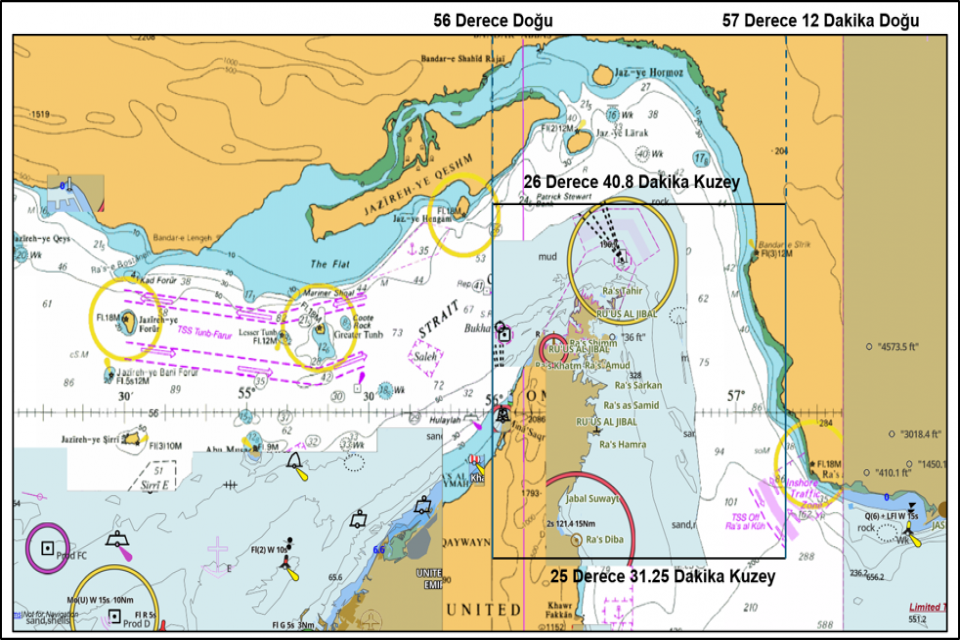
Chart No-1: The Strait of Hormuz
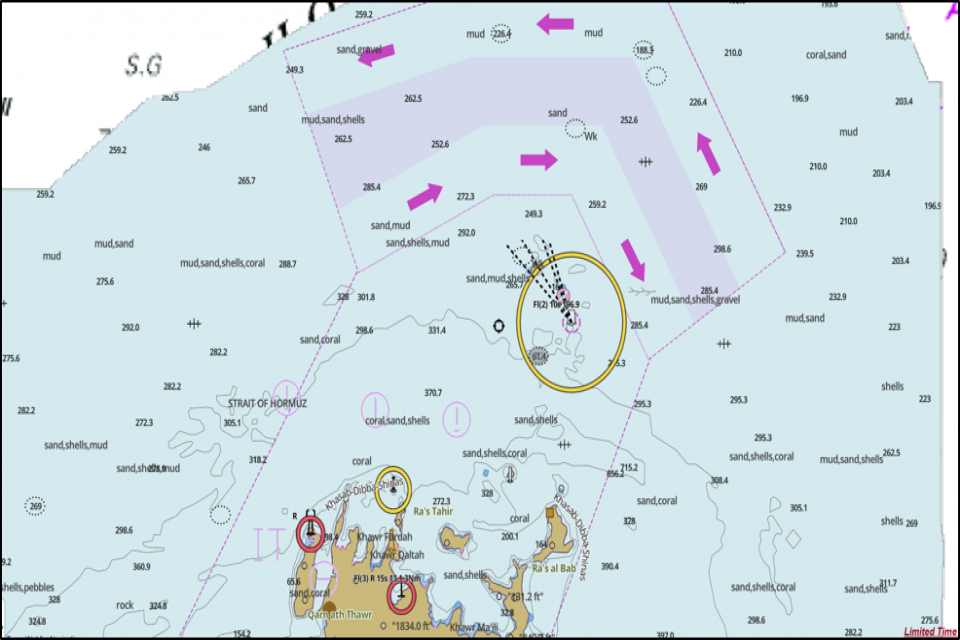
Chart No-2: The Traffic Separation Scheme in the Strait of Hormuz
At larger chart scales, it becomes evident that within the reference area shown in Chart No-1, the depths—excluding the shallow waters near the coasts—vary between 100 and 350 meters. The seabed composition is predominantly sand and mud. No information on currents is indicated.
In conclusion, these limited and static environmental conditions based on open-source data suggest that the Traffic Separation Scheme in the Strait of Hormuz and its surrounding areas may be suitable for minelaying operations.
Let us now examine the mines in Iran’s inventory. We do not have access to classified official information, and it should be kept in mind that this area remains prone to surprises.
The types of mines identified from open sources are as follows, and it is also known that each type may have different operational modes or variants.
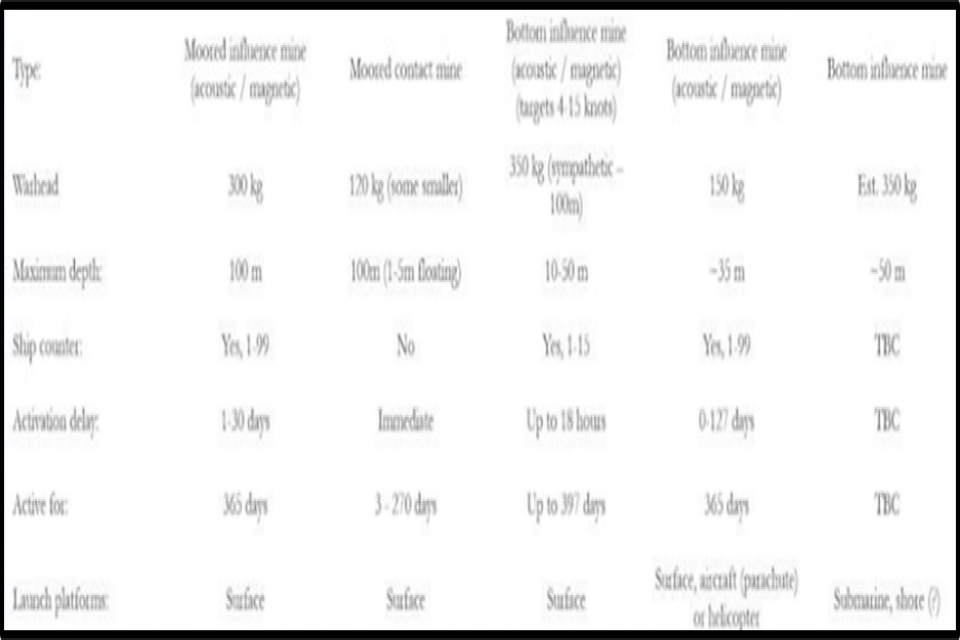
Table No-1: Iranian Naval Mines
Source: https://www.hisutton.com/Iranian-Naval-Mines.html
Does Iran have a platform capable of conducting minelaying of moored and bottom mines?
On March 10, 2026, open-source reports indicated that 16 Iranian naval vessels with minelaying capability were struck by U.S. aircraft and were either damaged or sunk. However, some sources also claim that Iran has already laid 10 mines. It remains unclear whether this minelaying took place before, during, or after these engagements. If the report is accurate, even the existence of 10 mines—whose locations and types are unknown—constitutes a significant threat in itself.
Such open-source information must be verified. Nevertheless, even such a report creates what is commonly described as “the rumor being worse than the event itself.” In other words, the mere circulation of such claims can be more impactful than their actual realization. In a form of warfare based on probability, even rumors must be taken seriously and assessed accordingly. Moreover, this would have broader strategic consequences. Even the suspicion of a single mine could affect global maritime insurance premiums and potentially have a disruptive impact on oil prices.
The region has been under sustained surveillance and control by the United States, both at sea and from the air, for weeks. There is visual evidence indicating that Iran’s key surface minelaying platforms have been damaged. At present, Iran’s ability to employ a suitable surface platform, arrange mines on deck using a rail system according to a specific pattern and sequence, and conduct precise minelaying operations appears limited. In an environment where intelligence sensors are intensely focused on the area, mines could be detected even during the loading phase. However, it should be reiterated that mine warfare is inherently unpredictable.
The creation of a gap that could go unnoticed for a fully equipped loading and minelaying operation, or an intelligence failure on the opposing side, could of course change everything. In this context, an open-source U.S. intelligence report from years ago stated that Iran could exploit darkness, adverse weather conditions, the cover provided by commercial shipping, and time windows when AWACS aircraft are refueling in order to protect its minelaying units from detection and intervention. For such an operation, it is not strictly necessary to use a dedicated naval minelayer ship. Even a stern-ramp RO-RO vessel or a vehicle ferry could be adapted for this purpose by installing a rail-based deployment system.
On the other hand, I believe that assessing the operational readiness of air and submarine platforms for minelaying based solely on open sources is extremely difficult, and without sufficient data, such assessments may not be realistic. A publicly available CIA report published in 1984 stated that RH-53 helicopters were capable of laying mines from an altitude of 15 meters above the surface. It is certainly possible that such capabilities have evolved since then. However, there is currently a lack of reliable data.
Meanwhile, some television commentators refer to supposedly mobile Iranian mines hidden in underwater caves. These claims appear to be based on unverified internet sources. What is likely being referred to are EM-52 rocket-propelled rising mines allegedly acquired from China. However, these are typically deployed via torpedo tubes. Their actual performance is not fully known. Moreover, it is unclear whether Iran still possesses platforms equipped with such systems. There are also claims about intelligent mines capable of detecting and classifying targets based on magnetic or acoustic signatures. However, it is debatable how advanced such capabilities are in Russian and Chinese mine systems. If such capabilities exist, they would likely be found only in classified sources.
Another possibility is minelaying conducted using a third-party platform, which could further complicate and escalate the situation for coalition forces.
If Iran lacks a platform capable of systematically laying large numbers of mines, a more plausible approach would be to use small fast boats to conduct intermittent, small-scale deployments—one or two mines at a time—during opportune windows, thereby creating a continuous harassment obstacle and achieving a surprise effect.
Could Iran generate a credible level of threat through this method?
Most likely not. The number of mines that can be deployed by small fast boats would be limited, as would their explosive charge. Sustaining continuous and persistent minelaying operations over a period using such platforms would be risky for Iran, although it could still lead to damage and attrition of coalition forces.
In such a scenario, the use of the Maham-1 Antenna Moored Contact Mine appears to be more feasible. Considering its explosive charge, it may not sink a vessel outright but could inflict damage. Based on open-source information, this seems to be the most reliable course of action available for deployment.
Open sources include images suggesting that Maham-1 moored contact mines can be carried individually by 6.7-meter high-speed Ashura-class boats. However, as seen in Photo No-1, it is conceivable that such a vessel could capsize due to the weight of the mine during deployment. It is also unclear how the mine anchor, located beneath the mine case, is secured in such configurations. If these images are not AI-generated, it is possible that a mechanical arm system is used to lay the mine case first, then release the mooring cable, and finally drop the anchor into the water. This process may even be carried out without a depth-setting mechanism.
Even with this method, it would be possible to strain, fatigue, and continuously engage coalition mine countermeasure forces, forcing them to conduct ongoing mine clearance operations.
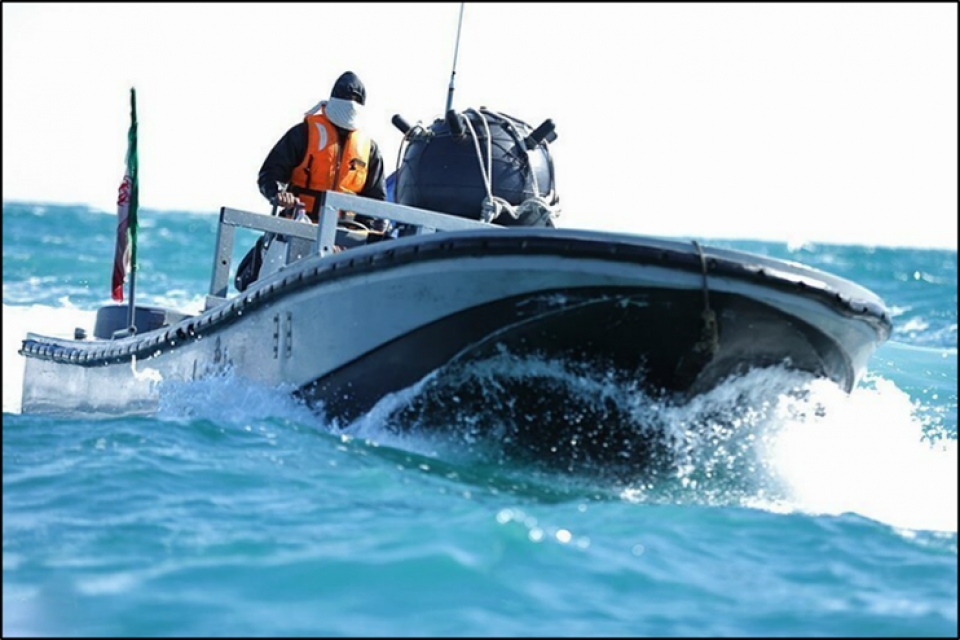
Photo No-1: Ashura-class Fast Boats
Source: https://en.wikipedia.org/wiki/Ashura-class_speedboat
On the other hand, it is observed that merchant vessels from India, Pakistan, Iraq, Malaysia, and China are being allowed by Iran to enter and exit the Strait of Hormuz via a route north of Larak Island, above the main traffic lanes. As illustrated in Chart No-3, Iran appears to be seeking to establish a secure shipping corridor for transit into and out of the Gulf.
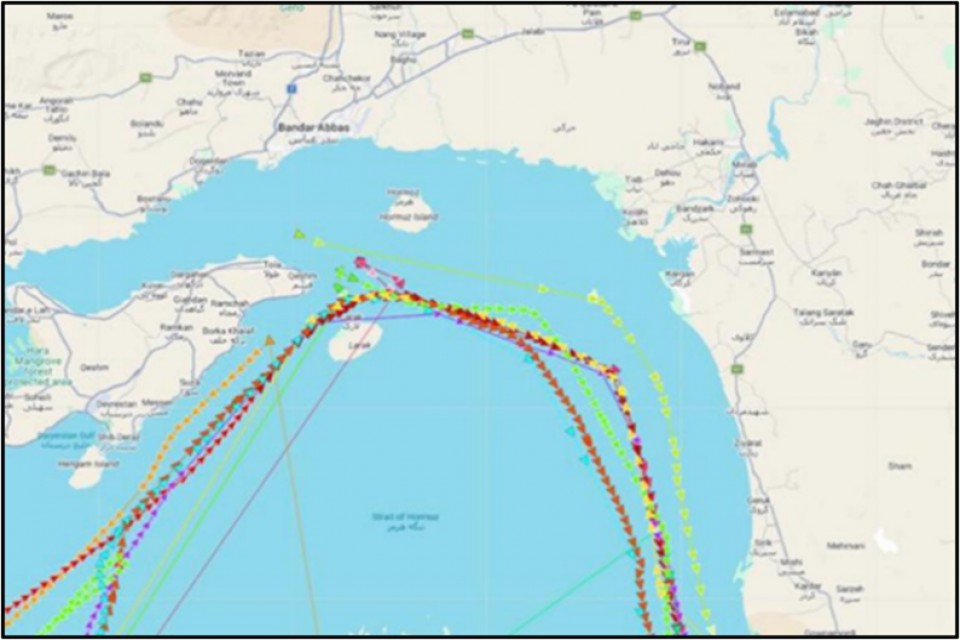
Chart No-3: Iranian-Designed Alternative Shipping Corridor North of Larak Island
Source: Lloyd’s List LinkedIn Account
It appears that Iran is attempting to separate the vessels of countries it considers friendly from the area where the Strait’s traffic separation scheme is located. This situation also reinforces previous claims that the area may have already been contaminated.
It should be emphasized once again that these assessments regarding the Strait of Hormuz are based solely on accessible open-source information.
Ultimately, it must also be taken into account that, for defensive purposes, Maham-1 mines—as well as Maham-7 mines designed for shallow waters—could be deployed around Kharg Island in the Gulf, as well as around certain other islands within the Strait.
The second problem is as follows: following a potential Iranian minelaying operation, can the U.S. Navy assume responsibility for mine clearance and escort operations using its own Mine Countermeasure platforms?
Under these conditions, this does not appear very likely. Why?
As the United States increasingly brings up the possibility of a ground operation, discussions have begun regarding whether an amphibious operation could be an option. This naturally brings the risk of encountering a mine threat to the forefront. If an approach to the Iranian coastline by sea becomes necessary, cleared and secure maritime channels would be required for amphibious ships and landing craft prior to any amphibious operation.
Which MCM assets would be used to establish these safe maritime corridors?
A significant portion of the Avenger-class mine countermeasure ships has been decommissioned. In response, efforts have been made to adapt some of the Independence-class Littoral Combat Ships (LCS)—measuring 127 meters in length, 31 meters in beam, and with a draft of 4 meters—into multi-role platforms through a modular system. These vessels have been equipped with systems that can be transported in standard containers. This modular approach was intended to support Surface Warfare and Anti-Submarine Warfare operations. However, the situation evolved once mine warfare capabilities were also incorporated into these ships.
This issue has been widely debated in the U.S. public domain. Some officers who previously served on Avenger-class minehunting ships have argued that the modular system on LCS-type vessels is not suitable for MCM operations. It has also been claimed that, due to numerous technological limitations and failures, these ships are not as effective as their predecessors.
Beyond the modularity issue, mine warfare—whether in terms of laying or hunting—operates under a fundamentally different concept compared to other types of naval warfare. Personnel trained in other forms of naval combat cannot simply be reassigned and expected to conduct mine warfare operations. Why?
The key distinction lies in the fact that, unlike other forms of naval warfare that seek definitive outcomes, mine warfare results are expressed in probabilistic terms. Factors such as the intended operational area or channel, its physical characteristics, available mine intelligence, the number of platforms, and any time constraints are all incorporated into a mathematical and statistical framework. The outcomes of minelaying or mine countermeasure operations are expressed in terms of clearance percentage and risk percentage. These results then serve as data for planners in shaping subsequent operational decisions.
There are reports indicating that three aluminum-hulled trimaran vessels, originally intended as multi-mission platforms, are currently operating in a fixed configuration dedicated solely to MCM operations. However, this information remains unverified. Utilizing three 127-meter vessels exclusively for MCM operations under a single configuration would represent a rather costly approach. Other sources suggest that the multi-mission concept is still being maintained. It raises the question of whether the focus on MCM modules in these three vessels is a direct consequence of the conflict with Iran.
It is reported that the vessels expected to operate in the Gulf with MCM modules are USS Canberra (LCS-30), USS Santa Barbara (LCS-32), and USS Tulsa (LCS-16). However, the current locations of these ships, which reportedly departed the Persian Gulf in mid-2025, cannot be verified through open sources at present.
Furthermore, it is stated that personnel assigned to carry out MCM missions have been specifically designated for these vessels. These personnel are reported to have undergone rigorous training at training centers in Mayport and San Diego.
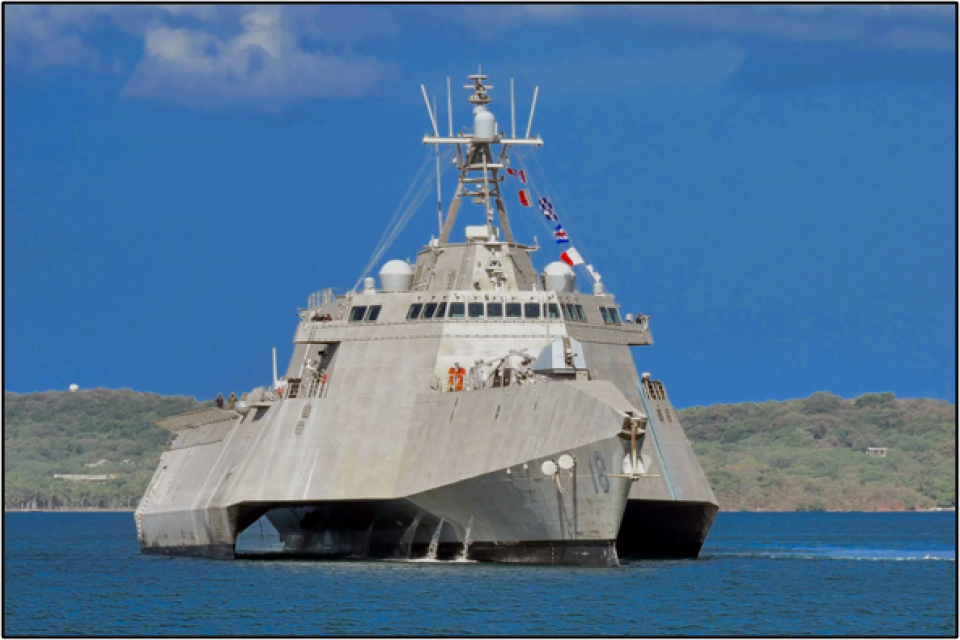
Photo No-2: Littoral Combat Ship (LCS)
Source: Google
Would these three LCS-type vessels be sufficient to counter the mine threat in the Strait of Hormuz?
It is widely understood that they would not be sufficient.
Without going into technical detail, it can be stated that these vessels employ a mission network composed of drones, robotic surface vehicles, and helicopters. This system, ranging from sonar-equipped unmanned surface vessels to airborne laser detection systems, is reported to be capable of detecting and neutralizing mines from a safe distance.
All of these capabilities, however, are based on theoretical or doctrinal information. The actual effectiveness of these ships may differ.
Indeed, an open-source report—undated but likely based on an exercise conducted off San Diego—revealed significant vulnerabilities associated with these vessels.
The critical vulnerabilities of MCM-configured LCS-type ships reportedly include:
Each unmanned surface vessel requires more than four hours of maintenance prior to a mission,
USVs require approximately 1.5 hours of GPS/sonar calibration after being launched,
In some missions, sonar systems failed to record data, with personnel only discovering the issue during post-mission analysis,
In an exercise involving USS Tulsa (LCS-16), an out-of-control USV drifted toward Mexican territorial waters and could not be recovered,
Visual identification of mines using underwater cameras proved unsuccessful even in relatively clear waters off California, suggesting significantly worse performance in the turbid waters of the Persian Gulf,
Critical systems—such as the lifting mechanism between the mission bay and hangar (likely the module container), test computers, crane systems, and loading equipment—lack redundancy, meaning that a single failure can halt operations,
Due to competing mission requirements, personnel aboard these three LCS vessels reportedly face challenges in maintaining focus on MCM duties.
It is also known that since entering service, LCS-type ships have experienced chronic electrical and generator failures, leading to multiple modifications. In their early years, they were even nicknamed “Little Crappy Ships.”
What is the current status of these issues, and what is the operational readiness level of these vessels? For now, this remains unclear.
Another key issue is the planning of MCM operations in and around the Strait of Hormuz.
In the past, a think tank called The Washington Institute published an analysis suggesting that 16 MCM vessels would be required to clear the Strait of Hormuz of mines. At the time, this estimate was likely based on the relatively large number of Avenger-class mine countermeasure ships available, and may have assumed that a clearance percentage of up to 98% could be achieved. However, factors such as the operational area, channel dimensions, depths, and mine intelligence—considered within the maritime space depicted in Chart No. 1 and Chart No. 2—may have changed significantly since then. Therefore, the requirement for 16 MCM vessels in the past should not be directly interpreted as today’s requirement. That said, in such a high-intensity operational environment, the number of MCM vessels should certainly not be as low as three. The required number of ships must be determined based on known and estimated operational parameters.
We do not have precise information regarding the dimensions, depths, or mine intelligence of the planned operational area or channel in the Strait of Hormuz. However, even if other variables change, it appears highly unlikely that three LCS-type vessels could achieve a 98% clearance rate without sustaining losses. On the other hand, the operational impact of advanced technologies—such as laser detection systems onboard these ships—remains uncertain and should also be taken into consideration.
What is known from open sources is that, during an exercise conducted out of San Diego, issues related to modular systems and personnel persisted, and that these ships lack real-world MCM operational experience.
If even one of the vessels operating in different areas or channels were to be damaged or sunk, the clearance percentage would decrease while the risk percentage would increase.
In conclusion, there is already a growing need for additional MCM ships to support the LCS fleet. It is reported that, if not decommissioned, four Avenger-class minehunter ships are being kept in reserve at Sasebo, Japan. However, even if these ships were deployed, I believe they would not significantly alter the overall clearance percentage.
Moreover, during MCM operations, these vessels would need protection from land-, sea-, and air-based threats. Given that the United States has struggled to protect an aircraft carrier off the coast of Oman, conducting MCM operations with these ships so close to Iran’s coastline would likely be extremely challenging.
Could an expanded coalition contribute to this effort? Under current conditions, this also appears unlikely. Attempts to outsource MCM operations to other countries have reportedly produced negative results. Even the possibility of a single mine being present has brought the level of risk to maritime traffic close to unacceptable levels. From the U.S. perspective, we are witnessing how ambiguous and externally driven political objectives have complicated the situation. Iran has demonstrated that it can generate significant asymmetric effects with relatively limited means and capabilities.
Sources:
Lott, Alexander, ‘‘The Legality of Iran’s Closure of the Strait of Hormuz’’, EJIL:Talk!, 10 March 2026, https://www.ejiltalk.org/the-legality-of-irans-closure-of-the-strait-of-hormuz/
Bertrand, Natasha, ‘‘Iran begins laying mines in Strait of Hormuz, sources say’’, CNN Politics, 11 March 2026, https://edition.cnn.com/2026/03/10/politics/iran-begins-laying-mines-in-strait-of-hormuz
‘‘An Intelligence Assessment’’, The Iranıan Mine Warfare Threat, CIA, November 1984, https://www.cia.gov/readingroom/docs/CIA-RDP85T00314R000300100002-7.pdf
Spendley, Blake, Johnston, Carter, ‘‘Demining Hormuz: How the U.S. Navy Arrived at Worst-Case Scenario Unprepared’’, HUNTERBROOK, 13 March 2026, https://hntrbrk.com/demining-hormuz/
‘‘Why the Navy Ditched Its Legendary Mine Hunters’’, Youtube, 24 March 2026, https://www.youtube.com/watch?v=rET96MeWAQc
Lagrone, Sam, ‘‘Navy Deploys First Operational LCS Mine Countermeasures Packages’’, USNI News, 18 March 2025, https://news.usni.org/2025/03/18/navy-deploys-first-operational-lcs-mine-countermeasures-packages
Ceder, Riley, ‘‘The US has counter-mine ships homeported in the Middle East. Are they effective?’’ Navy Times, 24 March 2026, https://www.navytimes.com/news/your-navy/2026/03/23/the-us-has-counter-mine-ships-homeported-in-the-middle-east-are-they-effective/
Trevithick, Joseph, ‘‘U.S. Navy Minesweepers Stationed In Middle East Are Now In Singapore’’, The War Zone, 18 March 2026, https://www.twz.com/sea/u-s-navy-minesweepers-stationed-in-middle-east-are-now-in-singapore
Comments ( 0 )